Understanding SS-31 (Elamipretide): A Comprehensive Research Overview
SS-31, also known as Elamipretide, is a synthetic tetrapeptide that has attracted significant attention in mitochondrial and cellular energy research. Researchers have investigated SS-31 for its ability to interact with mitochondrial membranes, support cellular energy production, and influence oxidative stress pathways.
Recent scientific studies have explored how SS-31 interacts with cardiolipin-rich mitochondrial membranes and how these interactions may affect mitochondrial function in experimental models. As interest in mitochondrial biology continues to grow, SS-31 remains a frequently studied compound across a variety of research disciplines.
What Is SS-31?
SS-31 is a small synthetic peptide composed of four amino acids arranged in an alternating aromatic-cationic structure.
Researchers have studied SS-31 because of its ability to selectively accumulate within mitochondria and interact with cardiolipin, a phospholipid found primarily in the inner mitochondrial membrane. These interactions have made SS-31 an important tool in studies focused on mitochondrial integrity and cellular bioenergetics.
Mitochondrial Function and Cellular Energy
Mitochondria play a central role in cellular energy production through oxidative phosphorylation. Scientific investigations have examined whether SS-31 may influence mitochondrial efficiency and respiratory function in laboratory models.
Research suggests that SS-31 interacts with mitochondrial membranes and may help support normal electron transport chain activity under certain experimental conditions. These observations have contributed to growing interest in SS-31 as a research compound for studying mitochondrial health and cellular resilience.
SS-31 and Neurodegenerative Disease Research
A 2026 study published in Chemical Biology & Drug Design examined how SS-31 affected alpha-synuclein, a protein associated with Parkinson’s disease and related neurodegenerative disorders. Researchers reported that SS-31 altered alpha-synuclein membrane interactions, reduced membrane-induced aggregation, and improved mitochondrial function in cultured neuroblastoma cells.
The study also found that SS-31 appeared to reduce cellular uptake of alpha-synuclein oligomers while supporting mitochondrial respiratory activity in experimental models. These findings have increased scientific interest in SS-31 as a tool for investigating mechanisms involved in neurodegenerative diseases.
Oxidative Stress and Cellular Research
Oxidative stress remains a major focus of modern biological research because of its involvement in cellular aging and mitochondrial dysfunction.
Researchers have explored SS-31’s interactions with mitochondrial membranes and its potential influence on reactive oxygen species (ROS) generation. Experimental models have suggested that mitochondrial-targeting peptides such as SS-31 may provide valuable insight into the relationship between oxidative stress, cellular metabolism, and tissue function.
Why Researchers Continue to Study SS-31
SS-31 remains an important research peptide because it combines a small molecular structure with selective mitochondrial targeting.
Scientists continue to investigate its effects on mitochondrial respiration, membrane interactions, oxidative stress pathways, and neurodegenerative disease models. As understanding of mitochondrial biology advances, SS-31 continues to serve as a valuable tool for exploring cellular energy regulation and mitochondrial function.
Original Source
This article was inspired by research published in Chemical Biology & Drug Design and supplemented with review of the scientific literature cited by the publication. Readers interested in the original article can view it below.
Original Source: https://onlinelibrary.wiley.com/doi/full/10.1111/cbdd.70332
References
- Stefaniak E, Cui B, Yan X, Sun K, Teng X, Ying L. Therapeutic Peptide SS-31 Modulates Membrane Binding and Aggregation of α-Synuclein and Restores Impaired Mitochondrial Function. Chemical Biology & Drug Design. 2026.
- Szeto HH. Mitochondria-Targeted Peptide Antioxidants: Novel Neuroprotective Agents. AAPS Journal. 2006.
- Mitchell W, Ng E, Tamucci J, et al. The Mitochondrial-Targeted Peptide SS-31 Binds Lipid Bilayers and Modulates Surface Electrostatics. Journal of Physical Chemistry B. 2020.
Related Research Materials
The products listed below are intended for laboratory research and development purposes only. References to scientific literature are provided for educational and informational purposes.
-
Product on sale
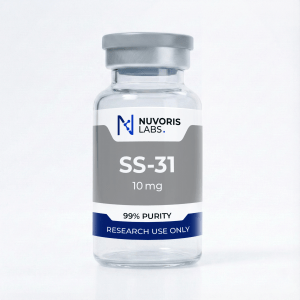 SS-31 (Elamipretide) | 10mg | 40mg | 60mgPrice range: $44.00 through $124.00
 -
Product on sale
 Mots-C | 10mg | 30mgPrice range: $49.00 through $82.00