GHK-Cu: Exploring the Science of Regeneration and Tissue Repair
GHK-Cu (glycyl-L-histidyl-L-lysine copper complex) is a naturally occurring copper-binding peptide found in human plasma, saliva, and urine. Researchers have studied GHK-Cu for decades because of its proposed relationship to tissue remodeling, extracellular matrix regulation, collagen production, and cellular repair processes.
Interest in GHK-Cu has grown due to its involvement in multiple biological pathways associated with skin regeneration, wound healing, and cellular communication. This article reviews current scientific literature surrounding GHK-Cu and highlights several key areas of ongoing investigation.

What Is GHK-Cu?
GHK is a naturally occurring tripeptide composed of three amino acids:
- Glycine
- Histidine
- Lysine
When bound to copper ions, it forms GHK-Cu, a complex extensively investigated in studies involving skin biology, tissue remodeling, and regenerative processes.
Research has demonstrated that GHK-Cu may interact with extracellular matrix components, cellular signaling pathways, and genes involved in repair and regeneration.
Research on Skin Regeneration
One of the most studied areas involving GHK-Cu is skin regeneration.
Scientific investigations have reported that GHK-Cu may influence:
- Collagen synthesis
- Glycosaminoglycan production
- Extracellular matrix remodeling
- Fibroblast activity
- Keratinocyte proliferation
Researchers have proposed that these activities contribute to the peptide’s relationship with tissue repair and skin renewal processes..
Cellular Signaling and Gene Expression
Recent research suggests GHK-Cu may influence thousands of genes involved in cellular maintenance and repair.
Studies have reported that GHK-Cu can modulate gene expression patterns associated with:
- Tissue remodeling
- Inflammatory signaling
- DNA repair pathways
- Cellular growth regulation
- Extracellular matrix organization
This broad regulatory activity has made GHK-Cu an increasingly interesting subject within regenerative biology research.
Wound Healing Research
Researchers have explored GHK-Cu in experimental models involving wound healing and tissue repair.
Published studies have reported relationships between GHK-Cu and:
- Angiogenesis
- Fibroblast migration
- Collagen deposition
- Growth factor production
- Tissue remodeling responses
These findings have contributed to ongoing interest in understanding how copper-binding peptides interact with regenerative biological pathways.
Stem Cell and Regenerative Biology Research
Emerging research has investigated GHK-Cu’s interaction with cellular pathways associated with stem cell activity.
Studies suggest the peptide may influence markers associated with cellular renewal and regenerative potential, including pathways involved in keratinocyte and mesenchymal stem cell function. Researchers continue to evaluate how these mechanisms contribute to tissue maintenance and repair.
Original Source
This article was inspired by and adapted from peer-reviewed scientific literature published in BioMed Research International.
Original Source: GHK Peptide as a Natural Modulator of Multiple Cellular Pathways in Skin Regeneration.
References
- Pickart L, Vasquez-Soltero JM, Margolina A. GHK Peptide as a Natural Modulator of Multiple Cellular Pathways in Skin Regeneration. BioMed Research International. 2015.
- Pickart L, Vasquez-Soltero JM, Margolina A. GHK and DNA: Resetting the Human Genome to Health. BioMed Research International. 2014.
- Campbell JD et al. A Gene Expression Signature of Emphysema-Related Lung Destruction and Its Reversal by the Tripeptide GHK. Genome Medicine. 2012.
- Kang Y et al. Copper-GHK Increases Integrin Expression and p63 Positivity by Keratinocytes. Archives of Dermatological Research. 2009.
Related Research Materials
The products listed below are intended for laboratory research and development purposes only. References to scientific literature are provided for educational and informational purposes.
-
Product on sale
 GHK-Cu | 50mg | 100mgPrice range: $44.00 through $64.00
 -
Product on sale
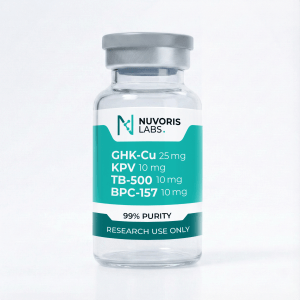 KPV | GHK-Cu | TB-500 | BPC-157Original price was: $131.10.$114.00Current price is: $114.00.
 -
Product on sale
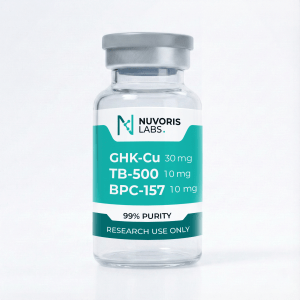 GHK-Cu | TB-500 | BPC-157Price range: $95.00 through $102.00