Thymosin β4 and Zinc: New Insights into Peptide Structure and Metal Coordination
Thymosin β4 (Tβ4) is a naturally occurring 43-amino acid peptide extensively studied for its involvement in cellular organization, actin regulation, tissue remodeling, and regenerative biology. While its biological functions have been investigated for decades, relatively little has been known about how this peptide interacts with biologically important metal ions.
Recent research has demonstrated that Thymosin β4 is capable of coordinating zinc (Zn²⁺), revealing a previously unrecognized aspect of its molecular behavior. These findings provide new insight into peptide chemistry and may help researchers better understand how extracellular metal ions influence peptide structure under specific physiological conditions.
What Is Thymosin β4?
Thymosin β4 is an endogenous peptide present throughout numerous human tissues, including the brain, heart, liver, kidneys, immune cells, and wound fluid.
Researchers have investigated its potential roles in:
- Actin regulation
- Cellular migration
- Cytoskeletal organization
- Tissue remodeling
- Angiogenesis
- Cellular signaling
Because of these diverse biological activities, Thymosin β4 continues to be an important model for studying cellular repair mechanisms and peptide biology.
Why Researchers Study Zinc Interactions
Zinc is one of the body’s most abundant essential trace elements and serves important structural and regulatory functions throughout biology.
The authors investigated whether zinc ions could directly interact with Thymosin β4 and alter its physical properties under physiological conditions.
Using multiple analytical techniques—including mass spectrometry, nuclear magnetic resonance (NMR), dynamic light scattering (DLS), and electron microscopy—they characterized how zinc influences peptide behavior in solution.
Key Research Findings
The investigators reported several notable observations:
- Aggregation appeared most likely in localized zinc-rich environments rather than under typical physiological zinc concentrations.
- Thymosin β4 formed stable complexes with Zn²⁺ ions.
- Zinc binding progressively reduced the peptide’s overall negative charge.
- At sufficient zinc concentrations, the peptide formed supramolecular aggregates.
- Zinc binding did not induce permanent folding of the peptide, which remained intrinsically disordered.
Potential Biological Significance
The authors propose that localized zinc-rich environments—such as areas of inflammation or specific regions within the nervous system—could influence Thymosin β4 behavior through metal coordination.
Although the biological implications remain under investigation, these findings introduce an entirely new dimension to understanding how peptide structure and extracellular metal ions may interact.
Future studies will be needed to determine whether these molecular interactions influence biological processes in living systems.
Current Research Considerations
This research focuses primarily on the physicochemical properties of Thymosin β4 and its interaction with zinc under experimental laboratory conditions.
Additional studies are necessary to determine the biological relevance of these findings in vivo and whether zinc-mediated peptide aggregation contributes to physiological or pathological processes.
Original Source
This article summarizes findings from a peer-reviewed study investigating zinc coordination and aggregation behavior of Thymosin β4.
Original Source: https://doi.org/10.3390/ijms27041740
References
- Lachowicz JI, Congiu T, Salis A, Marincola FC. Zinc Coordination by Thymosin β4: Structural Determinants and Functional Implications. International Journal of Molecular Sciences. 2026;27(4):1740.
- Crockford D, et al. Thymosin β4: Structure, Function, and Biological Properties Supporting Current and Future Clinical Applications. Annals of the New York Academy of Sciences. 2010.
- Goldstein AL, Kleinman HK. Advances in the Basic and Clinical Applications of Thymosin β4. Expert Opinion on Biological Therapy. 2015.
- Xing Y, et al. Progress on the Function and Application of Thymosin β4. Frontiers in Endocrinology. 2021.
Related Research Materials
The products listed below are intended for laboratory research and development purposes only. References to scientific literature are provided for educational and informational purposes.
-
Product on sale
 TB-500 (Thymosin Beta-4) | 10mgOriginal price was: $73.60.$64.00Current price is: $64.00.
 -
Product on sale
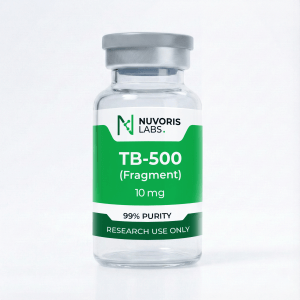 TB-500 Fragment (17-23) | 10mgOriginal price was: $73.60.$64.00Current price is: $64.00.
 -
Product on sale
 LL-37 | 4mgOriginal price was: $73.60.$64.00Current price is: $64.00.
 -
Product on sale
 KPV | 12.5mgOriginal price was: $56.35.$49.00Current price is: $49.00.
 -
Product on sale
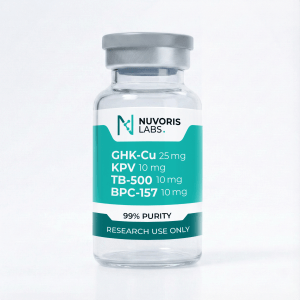 KPV | GHK-Cu | TB-500 | BPC-157Original price was: $131.10.$114.00Current price is: $114.00.
 -
Product on sale
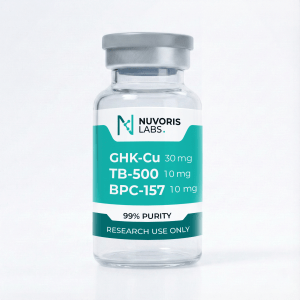 GHK-Cu | TB-500 | BPC-157Price range: $95.00 through $102.00
 -
Product on sale
 BPC-157 | TB-500 BlendPrice range: $57.60 through $98.00